
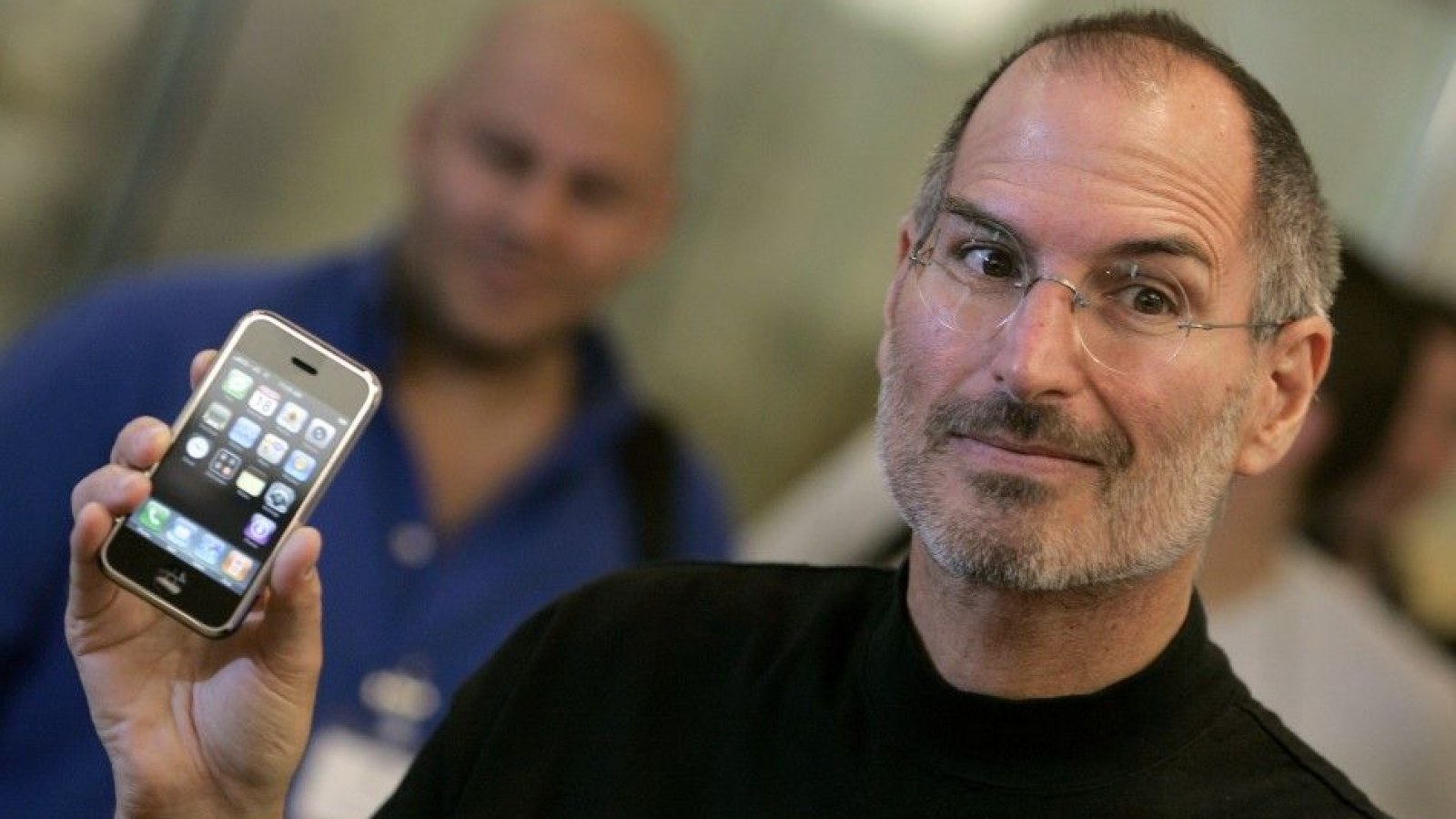
How Old Was Steve Jobs When He Died?

If you are interested in the life of Steve Jobs, then you might be wondering how old he was when he died. The answer will give you a lot of insight on how he ended his career, and on his legacy. In addition, you will also get some information on his relationship with his biological family, as well as the career path he took after his death.
Career path
Steve Jobs was a computer innovator who helped change the face of the computer industry. He was also a successful businessman, and a great example of how to be a good leader.
As a result of his hard work and determination, Steve Jobs built Apple into one of the world’s most valuable companies. However, he was not the only person responsible for the company’s success.
He worked with his brother Steve Wozniak to create the first Macintosh computer. They later developed Apple’s PowerBook and established the standard for laptop computers. In the 1990s, they began working with IBM on new PC microprocessors.
Steve Jobs subsequently founded a company, NeXT Inc., which specialized in high-performance workstations for universities and businesses. The company was funded by a Japanese electronics company.
At the end of the company’s life, it was eclipsed by more affordable competitor products. Despite its flaws, the company was able to produce a pen-based computer in 1993.
During his time at NeXT, Steve Jobs and English designer Jony Ive developed a very different advertising campaign. It focused on the innovative software system NEXTSTEP.
After leaving NeXT, Steve Jobs returned to Apple. However, he lost his direction after his success.
Upon his return, he took some of his Apple employees with him to NeXT. Steve Jobs then redirected his company’s focus away from building computers to develop software. Using NeXT, Jobs and Ive developed iTunes and the App Store.
The company was eventually purchased by Disney. During that time, Steve Jobs was also a member of the Disney board of directors.
Among other things, Steve Jobs is known for his vision. With his keen eye for the future, he often sought out industries that were ripe for disruption.
Last speech
Steve Jobs was an enigmatic and eccentric artist and businessman. He made an enormous impact on the technology world. But he was not always a pleasant person to be around.
In 1973, Steve Jobs was hired by Atari as a technician. Two years later, he returned to work with Wozniak at Apple. The pair soon began building Apple computers in their garage. Their first product was a Macintosh computer.
While at Apple, Jobs became the company’s chief executive officer. He left in 1985. However, he returned in 1997 to save the company from bankruptcy. During this period, he transformed Apple into a billion-dollar corporation.
Steve Jobs was a great artist, designer, and innovator. He is credited with changing the face of technology and making it beautiful. His work also included turning textbooks into artistic creations.
Throughout his life, Steve Jobs pursued various paths to enlightenment. He visited India in 1974, where he met Hindu guru Neem Karoli Baba. Later, he studied Zen Buddhism. Despite his health problems, he continued to search for enlightenment.
In 2011, Steve Jobs died from pancreatic cancer. This was the result of a Whipple operation that reconnected his bile duct and duodenum.
He was surrounded by a family and friends who loved him. He also was a public figure, appearing at high-profile events. When he died, his last speech was delivered at Cupertino City Council.
After his death, Jobs’ daughter, Lisa Brennan-Jobs, wrote a memoir. She then went on to publish a third novel, A Regular Guy.
Steve Jobs had many contradictions, but he was an icon of culture. And he was one of the most influential innovators of all time.
Pancreatic cancer diagnosis
Steve Jobs, the former Apple CEO and one of the most successful and creative people in the world, died from pancreatic cancer in October 2011. He was 56 years old when he died.
His cancer was diagnosed in 2003. When Jobs was 48, he began having symptoms that eventually lead to his diagnosis. It’s a difficult disease to diagnose, because its symptoms often appear after the cancer has spread to other parts of the body. Luckily, Jobs had plenty of resources to fight the cancer.
Despite his successful career, Jobs took time off to focus on his health. In 2009, he underwent an experimental treatment in Switzerland. Then, in March 2009, he flew to Memphis for surgery. However, doctors found that the tumor was spreading to his liver.
Jobs was diagnosed with a rare form of pancreatic cancer called pancreatic neuroendocrine tumor. This type of tumor is rare and is known to be easier to treat than other forms of pancreatic cancer.
Steve Jobs was given a very favorable prognosis. While his cancer was aggressive, he was able to live with it for nearly ten years after his diagnosis. During his illness, he sought alternative therapies and even went on a vegan diet.
Jobs’ tumor was discovered during a kidney stone CT scan. After a nine-month delay, Jobs agreed to surgery.
He underwent a Whipple Procedure to remove part of his small intestine and gallbladder. Though this procedure has been shown to cure some patients, it can also cause digestive problems.
Despite these complications, Jobs continued to work on new projects and designed a new campus for Apple. As of 2010, Apple had become one of the most successful and influential technology companies in the world.
Relationship with biological family
Steve Jobs had an unusual relationship with his biological parents. During his childhood, the two were estranged.
In the 1980s, Steve Jobs met his biological father. Before either knew he was related, they formed a friendship. He was also able to reconnect with his sister, Mona Simpson.
Although the two were friends, Steve Jobs chose not to talk about his biological parents. Eventually, Jobs discovered that his biological parents had kept a younger sister.
Originally, he had a high school girlfriend who had a child. When he was a boy, he was set to be adopted by two lawyers. However, the attorneys backed out.
Steve Jobs was born in 1955. His parents were Syrian-born Muslim immigrants. He was raised in California. After the adoption, his biological parents married and had another child.
As a teenager, Steve Jobs began to search for his birth family. When he was 27, he nearly gave up.
When Steve was a teenager, he swore in court that he was infertile. Eventually, he tracked down his birth mother, Joanne Schieble.
Schieble was pregnant with a baby, but her Christian father did not approve of the relationship. A few years later, the couple divorced. Afterward, Schieble moved to San Francisco to hide the scandal.
During her stay in San Francisco, Schieble became pregnant. At this point, her biological father was dying and had no desire to marry her. Her parents had a problem with her dating a Muslim.
Joanne Schieble eventually gave up her baby to Paul and Clara Jobs. They were Catholic and wealthy. The couple also wanted to have a college-educated adoptive family.
After losing Clara, Jobs re-established a relationship with his biological sister, Mona. It was like a nature-versus-nurture experiment.
Legacy
The life and death of Steve Jobs has made many people stop and think about his career. Even after all these years, his legacy continues to shape the technology industry.
He left a remarkable mark on many industries and countries. Among his most memorable contributions was the creation of the iPod, the first portable MP3 player. His other notable innovations include the iPhone, the iPad, the Macintosh, and Pixar.
But the true legacy of Steve Jobs is far more than what these products are. Instead, it is his ability to transform the way people interact and communicate. By giving people the ability to use innovative technology, he opened the door to a world of possibilities.
In addition to his innovations, Steve Jobs was an activist, a master of salesmanship, and a prolific author. As a result, his legacy will last for generations to come.
While his contributions to the tech industry are numerous, his greatest accomplishment was establishing Apple as one of the most influential companies in the world. With the launch of the iPad and iPhone, he redefined the mobile phone industry and pushed the boundaries of computing.
Aside from creating the iPad and the iPhone, Jobs was also a philanthropist. He invested in Pixar, a company that produced some of the most successful animated films of all time. These films include Monster’s Inc., Finding Nemo, and Toy Story.
Throughout his career, Steve Jobs worked with other notable individuals, including Steve Wozniak and Johnny Ive. The two men were a powerful team that developed iconic Apple products, from the iPod to the iPhone.
As a testament to his influence, there are many Steve Jobs artifacts and quotes around the Internet. Some of them, such as the iPhone’s headphone jack, are still in use today.