
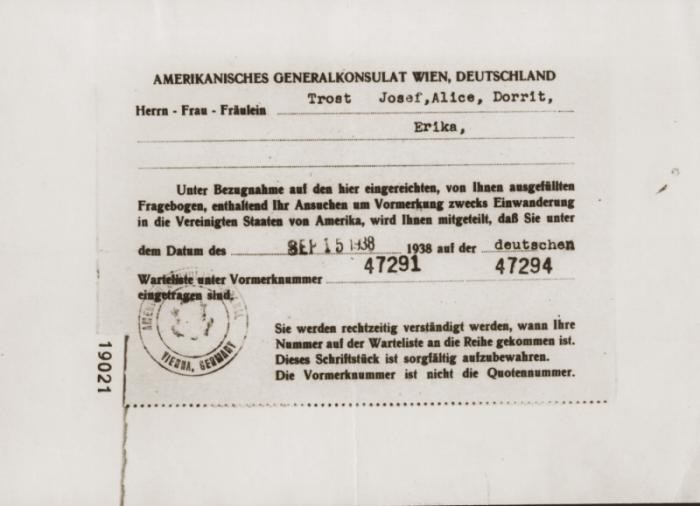

What Are Immigration Quotas?
The immigration quotas are the numbers that were set by Congress. They are not numbers that reflect the actual demand for immigration, which is one of the main reasons why people are calling for immigration reform.
In the 1920s, Congress passed a series of immigration quotas that limited entry to a specific number of immigrants from each country. This caused a huge decrease in immigration from Europe.
They are a way to control immigration
A key goal of the National Origins Quota System was to maintain the nation’s “character as a nation of northern and western European stock.” To accomplish this, quotas were based on the percentage of each country’s population living in the United States in 1890.
Initially, these quotas were temporary and limited to a few hundred immigrants from each country. But as immigration increased, the quotas became permanent. The Immigration Act of 1924, known as the National Origins Act, made the quotas even stricter and imposed them on each nation.
The quotas were also designed to protect America’s economic interests by keeping out undesirable groups of immigrants. They were intended to prevent the entry of workers who would compete with American labor for low-skilled jobs.
As a result, American labor unions supported the quota system and were successful in convincing Congress to pass it. The quota system also encouraged the creation of unions by making it easier to organize and negotiate union contracts.
However, the quota system also caused significant harm to American society. It decreased wages for working Americans, particularly in the urban areas where most of the immigrant quotas were implemented.
In contrast, it did not boost wages for workers in rural areas. Instead, it drove down wages for those who had already been here all along.
The quota system was especially damaging for low-skilled workers. As a result of the immigration quotas, many of the foreign-born workers who had come to work in the U.S. cities after the 1920s were replaced by higher-skilled U.S.-born workers who were not subject to the quota.
This created a lot of competition for lower-skilled jobs in the United States, which led to declines in the wages of native workers. It was only later that policymakers realized that the immigrants who were expelled under the quotas came from Mexico, not from the United States.
It is time to take a different approach to the problem of immigration. Instead of trying to control the flow of people into the United States, we should create a way to allow immigrants to be admitted to the United States on the basis of their merit and job offers.
They are a way to prevent illegal immigration
Immigration quotas are a form of immigration control that prevents immigrants from entering the United States illegally. These quotas were put in place to protect American citizens from illegal immigrants and also to ensure that only Americans are allowed to immigrate to the United States.
While immigration quotas are a good way to prevent illegal immigration, they can also be detrimental to the economy. The quotas that are set by Congress do not reflect the demand for immigration, and this causes a backlog in immigration. The backlog is something that the people are very concerned about, and this is one of the main reasons why people want to change the immigration laws.
Many people have this misconception that immigrants are taking jobs away from American workers, and this is something that needs to be addressed. However, it is important to note that immigrants do not take jobs from American workers; instead they create new jobs. They spend their incomes on goods and services in the United States, pay taxes and increase the productivity of businesses here.
Another myth is that immigrants are draining the economy. This is a completely false claim. In fact, most studies show that immigrants are beneficial to the economy.
For example, if an immigrant has a job that does not require a college education, it means that they will have more income in the long run than someone who only has a high school education. This means that they will be able to pay more taxes in the long run, which will help to improve our economy.
If we look at the history of our immigration policies, there are many instances when we have used quotas to keep out illegal immigrants from coming to the United States. For instance, in the 1920s, immigration from Europe was very restricted because of quotas.
But in 1965, we enacted a new law that changed the way immigration was managed. The Immigration and Nationality Act replaced the longstanding quotas that favored Northern Europe with a system that allocated visas according to a neutral preference system based on family reunification and labor force needs.
They are a way to create a backlog
Quotas in immigration law create a backlog of immigrants who can’t get green cards until they are processed. This is especially true of employment-based green card applicants, who often have to wait years to receive their green cards after their petitions are approved.
This backlog is largely created by nationality quotas, which limit the number of immigrants from each country to a specific percentage each year. These per-country caps, in particular, create long wait times for high-skilled workers from India and China, the major sources of H-1B visas that employ tens of thousands of Americans each year.
These long waits have a significant impact on the economy, as they prevent many of these workers from coming to the United States or finding new employers after their current jobs are terminated. They also can cause employers to hire fewer employees, leaving less money in the pockets of American families.
Moreover, the resulting backlogs can slow down immigration processing, delaying benefits and making it more difficult for immigrants to settle in the United States. As a result, immigration advocates have lobbied against nationality quotas.
A recent wave of layoffs in the technology industry, among the biggest fields employing H-1B visa holders, highlighted the effects of a long backlog. It left tens of thousands of workers on temporary visas, unable to find new jobs, and facing a long, uncertain path to green cards.
The government sets the overall numerical cap for employment-based green cards at 140,000 each year, plus any unused family preference immigrant numbers that roll over from the previous year. This is done to ensure that employment-based applicants don’t overwhelm the system.
Under the existing system, spouses and minor children who have a valid U.S. citizen or permanent resident status are given priority for their green cards, as well as humanitarian categories such as refugees and diversity lottery winners. These applications don’t face quotas.
However, there are also a few other types of immigrant visas that have quotas. Unlike spouses and minor children who are granted green cards immediately, employment-based applicants and certain refugees are forced to wait until they have a green card in their hands.
They are a way to create racial discrimination
Immigration quotas are a type of discrimination that are used by governments to limit the number of people who enter the country. These quotas can be used for employment-based visas and non-immigrant work visas.
These quotas are intended to prevent illegal immigrants from entering the country. However, they can also create racial discrimination.
The United States has a long history of racial discrimination against certain groups, particularly Asians and Africans. The nation’s racist past prompted many to look for ways to limit immigration from these groups.
In response to the Civil Rights Movement, immigration laws that were based on national origin were scrutinized and reformeteped in the 1960s. The new laws eliminated quotas on immigrants from nations that the United States considered “unassimilable”–such as Jews and Catholics of Eastern Europe–and created preferences for immigrants who were highly skilled or had family connections in the country.
But the abolition of national origin quotas did not solve the problem of racial discrimination in the US. There are still state and local policies that rely on racial profiling to control immigration, and the public debate has often targeted Latinos.
It is unclear whether the abolition of immigration quotas was directly influenced by the civil rights movement, but it did have an important impact on the nation’s future migration patterns. The new system created a preference for immigrants who were highly skilled in fields that the government believed needed more workers.
These quotas, however, did not improve wages for U.S.-born workers in both urban and rural areas. Instead, the quotas pushed people to leave those areas.
This caused a lot of economic distress for people who were already in the country, and it created a lot of competition for jobs. It also forced land owners to invest in capital and technology to replace the workers who were leaving.
It is not surprising that these policies were criticized, and it is not surprising that they eventually were repealed in the 1965 Immigration and Nationality Act. These laws were a direct reaction to geopolitical concerns and pressures coming from the international community, including the United Nations. They were a reaction to the growing number of independent Asian, African, and Latin American countries that sought to delegitimize racism.